-
 3663 Wrightsboro Augusta, Ga 30909
- 706-831-9948
 3663 Wrightsboro Augusta, Ga 30909
Bush Hogging vs. Forestry Mulching: Which Method to Choose
Bush hogging cuts and removes brush for debris removal; forestry mulching grinds vegetation in-place for erosion control. Both methods clear overgrown land, but they work differently and suit different situations. Choosing the right approach depends on your goals, terrain, budget, and what happens after clearing.
What Is Bush Hogging?
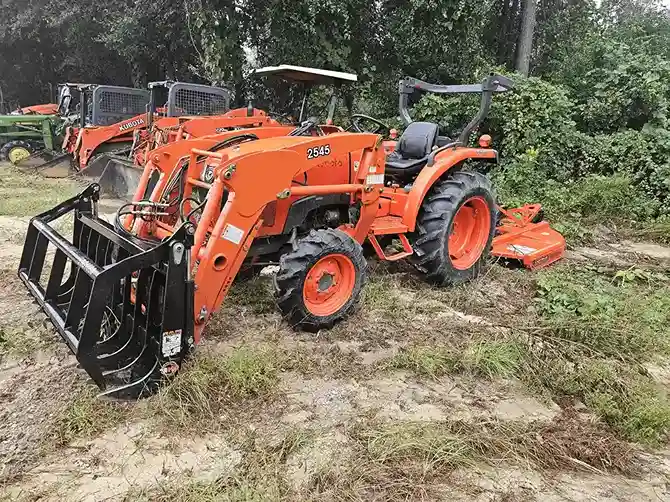
Bush hogging is a land-clearing method that uses a large, heavy-duty rotary mower attached to a tractor to cut and chop vegetation. The mower cuts tall grasses, weeds, and small bushes, leaving the cut material on the ground or collecting it for removal. This method has been used for decades by landowners and property managers who need affordable, straightforward brush control.
How Bush Hogging Works
A bush hog (or brush hog) cuts vegetation at or near ground level. The rotating blades work like a giant lawn mower, slicing through brush and debris. The operator drives the tractor slowly over the area, making multiple passes if needed. Cut material may be left as mulch on the surface or collected for removal elsewhere. The speed and effectiveness depend on the thickness of the vegetation and the power of the tractor.
Best Uses for Bush Hogging
- Maintaining pastures and fields (regular upkeep)
- Clearing lightly overgrown lots and open areas
- Removing tall grass and weeds before planting or construction
- Improving accessibility and visibility on property for safety
What Is Forestry Mulching?
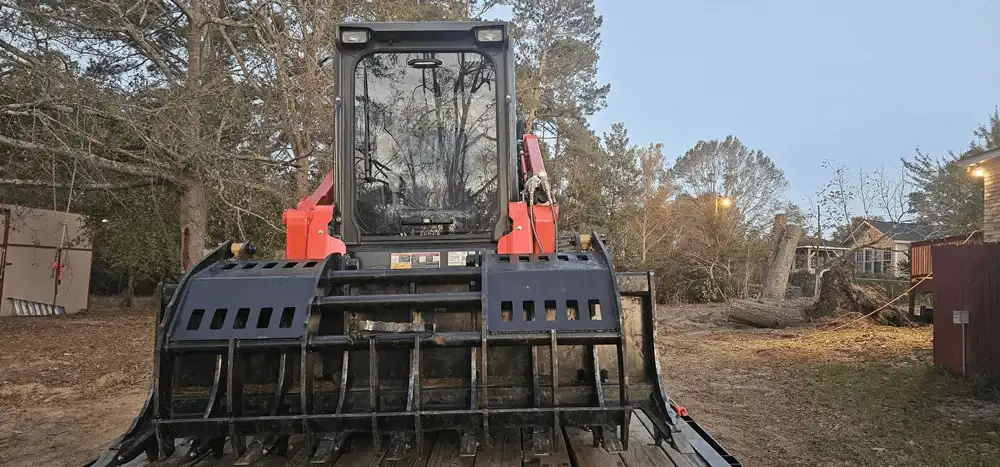
Forestry mulching is a land-clearing method that uses a specialized tracked machine with a rotating head to grind trees, brush, and vegetation into small chips or mulch. All material is processed on-site and left as organic ground cover. This method is ideal when complete clearing is needed, and the organic material can benefit the soil structure.
How Forestry Mulching Works
A forestry mulcher (or mulching head) operates on a tracked carrier and grinds vegetation into fine mulch as it moves through the cleared area. Trees, shrubs, stumps, and brush are all ground down to small wood chips in a single pass. The mulch stays on-site, enriching the soil and reducing erosion. No hauling, burning, or removal is needed. The tracked design also allows access to areas that standard equipment cannot reach.
Best Uses for Forestry Mulching
- Total land clearing for development or landscaping projects
- Removing dense underbrush and small to medium trees
- Site preparation for new construction or renovation
- Erosion control on slopes and sensitive areas (mulch holds soil in place)
Bush Hogging vs. Forestry Mulching: Key Differences
The main differences between bush hogging and forestry mulching come down to what you are clearing, what remains afterward, and your long-term maintenance plan. Understanding these differences helps you make the best decision for your property.
What It Removes: Bush hogging cuts grass, weeds, and small shrubs but leaves roots in the ground. Forestry mulching grinds entire trees, stumps, and brush into fine mulch.
Material Left Behind: Bush hogging leaves cut debris on the ground or removes it. Forestry mulching leaves fine wood mulch that enriches soil and prevents erosion.
Root Systems: Bush hogging leaves roots in ground, causing regrowth. Forestry mulching grinds roots down completely, preventing regrowth.
Soil Impact: Bush hogging has minimal soil impact (surface cut only). Forestry mulching adds organic matter and improves soil structure.
Erosion Control: Bush hogging offers limited erosion protection. Forestry mulching provides excellent protection with a mulch blanket.
Maintenance: Bush hogging requires repeat work annually or seasonally for best results. Forestry mulching is one-time clearing.
Initial Cost: Bush hogging costs lower per acre upfront. Forestry mulching costs higher per acre but offers long-term value.
Pros and Cons of Each Method
Bush Hogging Advantages
- Cost-effective for regular maintenance and upkeep
- Works well on open, accessible areas and flat terrain
- Quick and straightforward for light to moderate overgrowth
Bush Hogging Disadvantages
- Does not remove root systems, regrowth occurs quickly
- Cannot handle large trees or dense brush effectively
- Requires repeat maintenance (annual or seasonal)
- Cut debris may need removal or burning (environmental concerns)
Forestry Mulching Advantages
- Complete clearing in one pass (no regrowth)
- Grinds everythingtrees, stumps, roots, brush into usable mulch
- No hauling, burning, or waste removal needed
- Mulch enriches soil and controls erosion effectively
- Environmentally friendly (zero waste approach)
Forestry Mulching Disadvantages
- Higher upfront cost per acre compared to bush hogging
- Requires specialized, expensive equipment and trained operators
- More difficult on very steep terrain or rocky soil
When to Choose Bush Hogging
Bush hogging is the right choice when:
- You need regular maintenance on pastures or agricultural fields
- The area is open and relatively flat with good tractor access
- You are dealing with tall grass, annual weeds, and small shrubs (not large trees)
- Budget is the primary concern and you can tolerate repeat treatments
When to Choose Forestry Mulching
Forestry mulching is the right choice when:
- You need complete land clearing for development or landscaping
- The area has dense underbrush, small trees, or large woody vegetation
- You want to eliminate regrowth and avoid repeat maintenance
- Erosion control and soil health matter (slopes, sensitive areas)
- You prefer an environmentally friendly approach with no waste removal
Cost Considerations
Bush hogging is generally less expensive per acre upfront, making it attractive for budget-conscious property owners. However, repeat treatments add up over time. You may spend a few hundred to a thousand dollars annually depending on property size and vegetation density. Forestry mulching costs more initially but eliminates the need for follow-up work, potentially offering better long-term value if you need one-time, complete clearing.
For maintenance-oriented work (keeping fields mowed and accessible), bush hogging is the economical choice. For development, new construction, or total removal, the one-time cost of forestry mulching often makes more financial sense when calculated over five or ten years.
Environmental Considerations
Both methods have environmental implications to consider. Bush hogging produces no emissions during cutting but leaves organic material on the ground. If burning is required for removal, air quality can be affected. Forestry mulching keeps all material on-site, which improves soil structure, increases nutrient content, and helps prevent erosion. The ground cover created by mulch reduces water runoff and filters contaminants, making it the more environmentally friendly option for sensitive areas.
Frequently Asked Questions
Can you use a bush hog to clear trees?
Bush hogs can handle small saplings and thin brush, but they are not designed for larger trees. Large trees require proper forestry mulching or professional tree removal. Attempting to bush hog large trees can damage equipment and create safety hazards.
Does forestry mulching prevent regrowth?
Yes. Forestry mulching grinds stumps and root systems completely, which eliminates the source of regrowth. Bush hogging leaves roots intact, so vegetation typically returns within weeks or months. This is a major advantage of mulching for permanent land clearing.
Is the mulch from forestry mulching safe to use in gardens or landscaping?
The mulch produced by forestry mulching is organic wood chips that improve soil structure and add nutrients. It is safe for landscaping and garden use once it has aged slightly. The mulch also helps retain soil moisture and reduce erosion on cleared sites.
Important Safety Disclaimer
This content is for informational purposes only. Tree and land work can be dangerous, always consult a licensed professional before attempting any tree removal, land clearing, or demolition project. Contact Augusta Landworks for a free estimate.
Ready to Clear Your Land?
Whether you need regular bush hogging maintenance or complete forestry mulching services, Augusta Landworks has the equipment, experience, and crew to get the job done right. We have served Augusta, GA, Evans, Martinez, Grovetown, Hephzibah, North Augusta, and Aiken for decades.
Fill out our site work form for a free consultation and quote. Call us at 706-831-9948 to speak with our team today.